The Day I Rejected, "This is Just Part of Aging"
Is pain really just part of aging? Here's why I stopped accepting stiffness as normal - and how mindset, movement, and daily practices can change how your body feels.
Monique O.
1/29/20266 min read


It happened on a regular weekday.
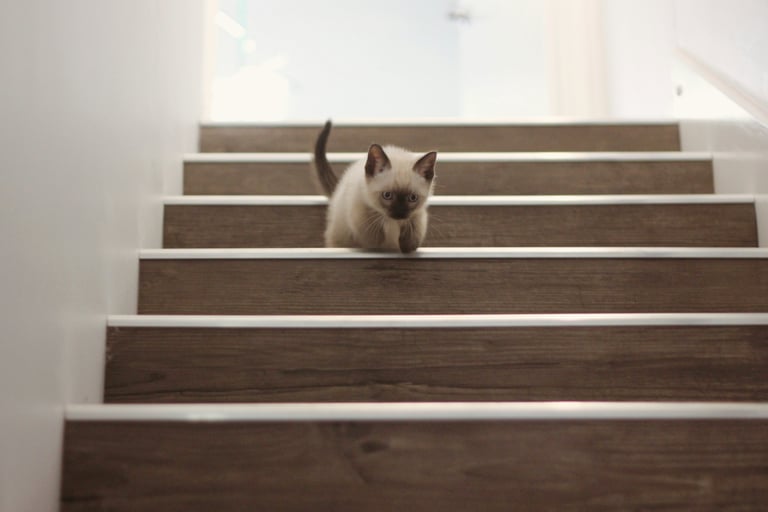
I was rushing up the stairs, phone in hand, mind already three tasks ahead, when my foot didn't quite clear the step. I stumbled. Caught myself on the railing. Didn't fall. But something shifted in that moment that had nothing to do with my balance.
I stood there, gripping the banister, heart pounding, and a thought surfaced that I couldn't ignore anymore: My body isn't moving the way it used to.
That stumble wasn't clumsiness. It was the physical manifestation of something I'd been dismissing for months - maybe years. Stiff hips. Chronic low back pain. That morning tightness I'd learned to "walk off." The way I'd started avoiding certain movements without even realizing it.
And the narrative I'd been telling myself? This is just part of aging.
That day, I rejected that story completely.
The Lie We've Been Told
Here's what I want you to understand: Stiffness isn't a symptom of aging. It's a symptom of neglect.
I know that sounds harsh. But hear me out: because this isn't about blame. It's about reclaiming what's actually possible for your body.
Women over 40 are fed this quiet, insidious message that pain, stiffness, and reduced mobility are inevitable. That we should expect to wake up feeling like our joints have rusted overnight. That "slowing down" is the responsible thing to do.
But research tells a different story. Studies show that hip stiffness and restricted mobility are directly linked to compensatory movement patterns that lead to chronic low back pain (Vad et al., 2004). Your tight hips aren't separate from your aching back - they're connected. Your body is one integrated system, and when one area locks down, others pay the price.
The real question isn't why is this happening to me? It's what has my body been asking for that I haven't been giving it?
My Body Was Speaking. I Finally Listened.
After that stumble, I started paying attention. Really paying attention.
The stiffness in my hips wasn't random. It had been building through years of sitting, stress held in my lower body, dehydration I didn't recognize, and inflammation I didn't understand.
I'd tried the usual fixes. Pushing through workouts. Popping anti-inflammatories. Convincing myself that a hot shower would sort it out. But nothing shifted. Because I was treating symptoms, not root causes.
That's when I made a decision that changed everything - I stopped forcing and started supporting.
The Pivot: Gentle, Intentional, Cellular
My pivot wasn't dramatic. There was no gym overhaul, no extreme diet, no expensive treatments. It was quieter than that - and far more powerful.
First, I embraced gentle flexibility practices.
Not the aggressive approaches I'd done in my twenties. Not the "no pain, no gain" approach that left me more inflamed than before. I'm talking about mindful movement...slow, intentional practices that worked with my body's natural range of motion rather than forcing it beyond its limits.
Research confirms what I experienced - gentle flexibility exercises for women over 40 can improve joint function without triggering the inflammatory response that intense exercise often causes (Page, 2012). My hips started releasing tension I didn't even know they were holding.
Second, I focused on creating an alkaline environment through nutrition and hydration.
This was the piece I'd been missing entirely.
I learned that chronic dehydration - even mild, subclinical dehydration - increases systemic inflammation and contributes to joint stiffness (Popkin et al., 2010). And I wasn't just under-hydrated; I was drinking water that wasn't actually supporting cellular absorption.
When I experienced mineral-rich, alkaline hydration and adopted an anti-inflammatory approach to eating, the changes were profound. Alkaline-forming diets have been shown to reduce markers of chronic low-grade inflammation and support musculoskeletal health (Schwalfenberg, 2012).
I wasn't adding complexity. I was removing the obstacles my body had been fighting against.
The Light Switch Moment
I wish I could tell you it was gradual. That I woke up one morning feeling 10% better, then 20%, then slowly climbed my way back.
But that's not how it happened.
It was more like a light switch.
One morning, just few weeks into this new approach, I swung my legs out of bed and stood up without that familiar grip of stiffness. I walked to the bathroom without the shuffle. I bent down to pick something up and just...did it. No bracing. No wincing. No negotiating with my lower back.
And the thought that hit me was this: Why was I living in the dark for so long?
I felt younger. Not in a superficial way - not "younger-looking" or "younger-acting." I felt like my body had remembered what it was designed to do. Move freely. Support me. Carry me through my days without constant negotiation.
"The body is not designed to deteriorate with age: it's designed to adapt. The question is: what are you asking it to adapt to?" - Dr. Kelly Starrett
That quote has stayed with me. Because I realised I'd been asking my body to adapt to neglect, dehydration, and chronic low-grade stress. And it had: by locking down, stiffening up, and sending pain signals I'd learned to ignore.
When I changed the inputs, the outputs transformed.
This Isn't Just My Story
Here's what I know now: I'm not special. My body isn't uniquely resilient or somehow immune to the effects of time.
What changed was my approach. I stopped accepting the narrative that stiffness and pain in the morning for women over 40 is inevitable. I stopped believing that natural ways to reduce chronic inflammation after 40 were too complicated or too late for me.
And I started treating my body like the intelligent, responsive system it actually is.
If you're reading this and recognizing yourself, if you've had your own "stair moment" or you're waking up every day negotiating with joints that feel decades older than you are, I want you to know something:
This doesn't have to be your story.
The connection between your stiff hips and your low back pain isn't a mystery. The role of hydration in joint health isn't fringe science. The power of gentle flexibility to unlock relief isn't wishful thinking.
It's physiology. It's research. And it's available to you right now.
The Invitation
I share this story not because I have it all figured out: I'm still learning, still refining, still listening to what my body needs as it evolves.
I share it because I spent too many years accepting limitations that weren't actually mine to carry. And I don't want that for you.
"Aging is not lost youth but a new stage of opportunity and strength." - Betty Friedan
The women I work with thru Circumvitalis aren't looking for quick fixes or miracle cures. They're looking for someone who understands, who's been in that moment of realization and chosen a different path.
If this resonates, start here: the Circumvitalis Daily Reset is designed to reduce daily inflammation and support your body in just 10 minutes each morning. It's not about overhauling your life. It's about giving your body what it's been asking for consistently, gently, and with intention.
Because you deserve to move through your days without pain ruling your choices.
And "just part of aging"? That's a BS story you get to reject too.
Be well.
References
Page, P. (2012). Current concepts in muscle stretching for exercise and rehabilitation. International Journal of Sports Physical Therapy, 7(1), 109-119.
Popkin, B. M., D'Anci, K. E., & Rosenberg, I. H. (2010). Water, hydration, and health. Nutrition Reviews, 68(8), 439-458.
Schwalfenberg, G. K. (2012). The alkaline diet: Is there evidence that an alkaline pH diet benefits health? Journal of Environmental and Public Health, 2012, 727630.
Vad, V. B., Bhat, A. L., Basrai, D., Gebeh, A., Aspergren, D. D., & Andrews, J. R. (2004). Low back pain in professional golfers: The role of associated hip and low back range-of-motion deficits. American Journal of Sports Medicine, 32(2), 494-497.





Let's be social!
Find relief from chronic inflammation today!
PO Box 25563 RPO Callaghan
Edmonton, AB. T6W 4N8
STAY INFORMED ON relievING INFLAMMATION
Circumvitalis does not provide medical advice, diagnosis or treatment.
Copyright © 2026 Circumvitalis. All rights reserved. Terms. Privacy Policy.