Beyond the Band-Aid: Why Healthy Habits Alone Won't Solve Systemic Stiffness
Eating well and staying active but still stiff? Learn why “healthy habits” alone often miss the root of systemic stiffness - and what actually helps long term.
Monique O.
2/1/20267 min read


You've done everything right.
The salads. Maybe the grilled chicken. The colourful vegetables that take up half your plate. You've cut the sugar, reduced the wine, and stopped ordering takeout on weeknights.
And yet.
You still wake up with stiffness and pain in the morning. Your hips still creak when you stand up from your desk. Your shoulders still feel like they belong to someone 20 years older.
Here's the hard truth no one is telling you: Your clean eating isn't failing because you're doing it wrong. It's failing because your body is "too acidic" to use any of it.
And until you address that, you could eat kale for the rest of your life and still feel like you're moving through cement every morning
The Lie We've Been Sold About "clean eating your way out" of Inflammation
Let's be direct.
The wellness industry has convinced women over 40 that if they just eat cleaner, the chronic inflammation symptoms will disappear. More greens. More omega-3s. More turmeric lattes.
But here's what the research actually shows: diet helps, movement helps, sleep helps - and even then, many women still stay stuck. Combined lifestyle approaches is required, and consistently outperform single interventions for pain and stiffness outcomes, which is why “just clean eating” often feels like it hits a ceiling.
And here’s the part most women never get told:
Clean eating and movement (yes - even Yoga or Pilates) don’t fully relieve inflammation if your internal environment stays "acidic". When the body is stuck in an acid-leaning state (often driven by diet patterns, stress load, and poor sleep), cellular hydration and tissue recovery don’t respond the way they should - even when your habits look “perfect” on paper.
You're not imagining it. The stiffness isn't in your head. And it's not simply because time marches on.
The real reason women feel stiff and inflamed has almost nothing to do with willpower, and everything to do with what's happening at the cellular level.
The Hidden Obstacle: Your Body is Running on Empty (even if you drink "enough water")
Here's where it gets interesting.
You probably drink water. Maybe even the recommended eight glasses. But chronic dehydration symptoms in women look nothing like a parched throat.
They look like:
Morning stiffness that takes an hour to shake off
Joint pain that "travels" around your body
Brain fog that coffee can't cut through
Inflammation that flares up despite your perfect diet
"Chronic low-grade dehydration is one of the most overlooked contributors to systemic inflammation. When cells lack adequate hydration, metabolic waste accumulates, and the inflammatory response accelerates." , Dr. Fereydoon Batmanghelidj, Your Body's Many Cries for Water
The issue isn't that you're not drinking water. It's that your body isn't absorbing it.
When your internal environment is too acidic, from stress, processed foods, poor sleep, or simply the hormonal shifts of perimenopause, your cells can't hydrate properly. The water you drink passes through you - instead of into you.
This is why supplements don't work without hydration. This is why your anti-inflammatory diet feels like it's doing nothing. This is why you're exhausted despite doing "all the things."
Your body is running a marathon on an empty tank.
The Cost of Staying the Same
Let's talk about what happens if nothing changes.
You'll keep waking up stiff. You'll keep adjusting your life around the pain, skipping the hike, avoiding the stairs. You'll keep buying supplements that in effect are collecting dust because your body can't absorb them anyway.
And here’s the truth: the cost of staying the same is paying twice - once with your money (ineffective programmes, products, practitioners) and again with your mobility (what your body quietly stops letting you do). Chronic inflammation is strongly associated with pain, functional limitation, and reduced quality of life over time.
This is also why so many women end up leaning on medications or injections as a “band-aid”.
Not because they’re weak. Not because they “didn’t try”.
Because symptom management is the default when the internal environment hasn’t been corrected. Analgesics and anti-inflammatories can reduce pain short-term, and injections can be used to temporarily manage joint symptoms - but they don’t rebuild hydration status, tissue quality, or range of motion on their own. If the root drivers (hydration, stress load, acid-base balance behaviours, daily movement quality) stay the same, the symptoms predictably return.
This isn't about Fear. It's about Staring Reality in the Face.
The women who reduce inflammation successfully aren't the ones who try harder. They're the ones who stop fighting the wrong battle.
The 72-hour Shift: What Actually Moves the Needle
Here's the pivot.
Research shows that lifestyle interventions work best together. But there's one intervention that acts as a gateway to all the others: cellular hydration.
When you shift your body's internal environment from acidic to alkaline, something remarkable happens in as little as 72 hours:
1. Your cells start absorbing water again. Proper hydration affects joint pain directly: fascia becomes supple instead of brittle, synovial fluid replenishes, and that "grinding" sensation begins to ease.
2. Your anti-inflammatory foods finally work. That turmeric you've been choking down? It can actually reach your tissues now. Those omega-3s? They're being utilized instead of flushed.
3. Your body stops hoarding inflammation. An alkaline environment supports your lymphatic system in clearing metabolic waste. The puffiness reduces. The joint pain during perimenopause becomes manageable.
4. Your energy returns. When your cells are hydrated, mitochondrial function improves. The fatigue that felt permanent starts to lift.
This isn't about drinking more water. It's about drinking different water and creating the conditions for absorption.
"The quality of water you consume directly impacts cellular function. Electrolysed high-pH water has been shown to improve rehydration markers (including reduced blood viscosity after dehydration), which is one pathway through which hydration status influences recovery." - Weidman, Holsworth, Brossman
Why this Works when Nothing Else Has
The Mediterranean diet works. Exercise helps. Sleep matters. The research confirms all of it.
But here's what the studies also show: the interventions work best when combined. Mind-body exercises lasting 8 weeks or longer produced significant reductions in stiffness. Fish oil at therapeutic doses showed measurable benefits. Movement alongside nutrition outperformed either alone.
The 72-hour shift isn't a replacement for clean eating. It's the missing bridge that makes everything else work.
Think of it this way: You've been trying to water a plant with a cracked pot. No matter how much you pour in, it leaks out. Cellular hydration repairs the pot.
What this Looks like in Real Life
You don't need to overhaul everything. You don't need a 30-day challenge or a complicated protocol.
You need to address the foundation first.
The women who see results in 72 hours do three things:
1. They shift their water. Alkaline water benefits for inflammation aren't hype: they're science. When the body's pH moves toward alkaline, inflammatory markers decrease and cellular hydration improves.
2. They stop adding and start subtracting. Instead of piling on more supplements, more superfoods, more "anti-inflammatory" products, they remove the obstacles to absorption. Less acid-forming stress. Less dehydrating caffeine. Less inflammation from poor sleep.
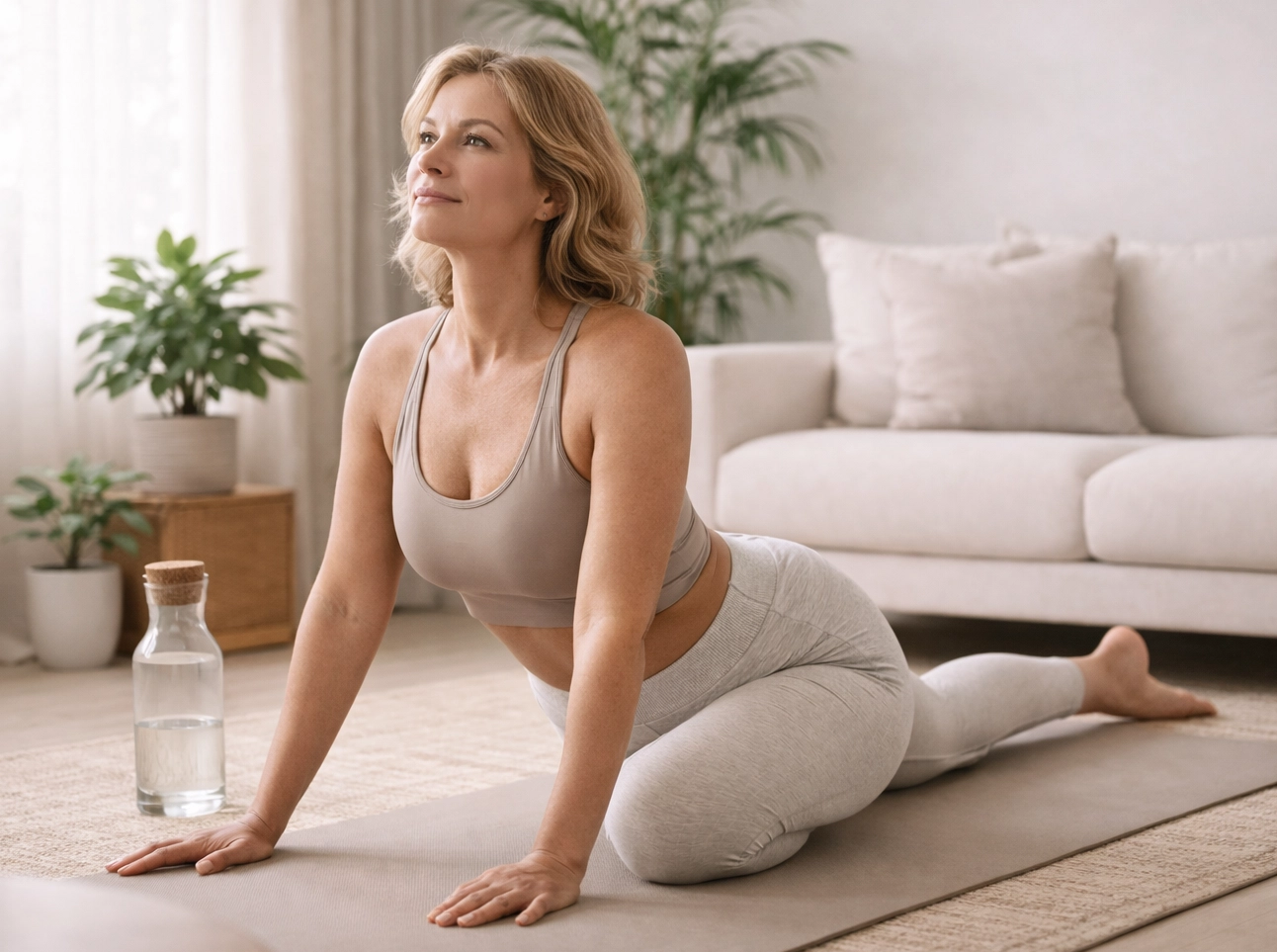
3. They move gently. Not punishing workouts. Not aggressive stretching. Gentle flexibility routines for stiff joints that work with the body instead of against it.
This is why the Circumvitalis Daily Reset exists. Ten minutes each morning to reduce daily inflammation and support your body: not through more information, but through a simple, repeatable practice that addresses the actual obstacle.
The Internal YES
Here's the question only you can answer:
Are you tired of managing symptoms, or are you ready to address the source?
Are you willing to spend another year wondering why your body doesn't respond to the healthy changes you're making? Or are you ready to try the one thing you haven't tried: the thing that makes all the other things work?
You don't need more willpower. You don't need another detox. You don't need to eat cleaner than you already are.
You need your body to actually use what you're giving it.
If this resonates, start here.
The Circumvitalis Daily Reset is designed for women who've tried everything and are ready for something different. Not more information: a decision.
Ten minutes. Every morning. The 72-hour shift that creates the conditions for everything else to work.
You've been fighting the right fight with the wrong tools. It's time to change that.
Be well.
References
Bannuru RR, Osani MC, Vaysbrot EE, et al. OARSI guidelines for the non-surgical management of knee, hip, and polyarticular osteoarthritis. Osteoarthritis and Cartilage. 2019;27(11):1578–1589.
Weidman J, Holsworth RE Jr, Brossman B, et al. Effect of electrolyzed high-pH alkaline water on blood viscosity in healthy adults. Journal of the International Society of Sports Nutrition. 2016;13:45.
Liao X, et al. The effect of mind-body exercise on cervical spine mobility of people with neck discomfort: A systemic review and meta-analysis of randomised controlled trials. PLOS ONE. 2022;17(1):e0262429.
Heil DP. Acid-base balance and hydration status following consumption of mineral-based alkaline bottled water. Journal of the International Society of Sports Nutrition. 2010;7:29.
Furman D, Campisi J, Verdin E, et al. Chronic inflammation in the etiology of disease across the life span. Nature Medicine. 2019;25(12):1822–1832.
Kolasinski SL, Neogi T, Hochberg MC, et al. 2019 American College of Rheumatology/Arthritis Foundation guideline for the management of osteoarthritis of the hand, hip, and knee. Arthritis Care & Research. 2020;72(2):149–162.
McAlindon TE, LaValley MP, Harvey WF, et al. Effect of intra-articular triamcinolone vs saline on knee cartilage volume and pain in patients with knee osteoarthritis: A randomized clinical trial. JAMA. 2017;317(19):1967–1975.





Let's be social!
Find relief from chronic inflammation today!
PO Box 25563 RPO Callaghan
Edmonton, AB. T6W 4N8
STAY INFORMED ON relievING INFLAMMATION
Circumvitalis does not provide medical advice, diagnosis or treatment.
Copyright © 2026 Circumvitalis. All rights reserved. Terms. Privacy Policy.